izzy Radio script
izzy Radio script - You can connect to any radio code in your favorite list. Compatible with ESX framework for FiveM servers.
Aperçu vidéo
Click to load video from YouTube. By watching, you agree to their privacy policy.
izzy Radio Script - Immersive In-Game Radio Communication System
The izzy Radio script brings professional-grade radio communication to your FiveM server with realistic features, intuitive controls, and authentic radio mechanics that enhance roleplay immersion. Whether you're running a serious law enforcement server, emergency services roleplay, military operations, or any scenario requiring team coordination, this radio system provides the communication infrastructure your players need for tactical coordination and realistic radio protocol.
Unlike basic voice proximity systems, the izzy Radio script replicates real-world radio communication with features like multiple channels, encryption levels, radio static effects, battery mechanics, and proper radio etiquette enforcement. When emergency services coordinate a multi-unit response, when gang members communicate during a turf war, or when security teams maintain perimeter communication, this script ensures those interactions feel authentic and immersive.
https://www.youtube.com/watch?v=sQGpkg_u3g0Key Features
- Multiple Radio Channels - Support for numerous channels allowing different groups to maintain private communications simultaneously
- Encrypted Channels - Secure communication channels that require special equipment or permissions to access, perfect for law enforcement and military
- Realistic Radio Effects - Authentic static, interference, and transmission quality based on distance and environmental factors
- Battery System - Radio devices consume battery power over time, requiring players to manage resources and carry spare batteries
- Range Limitations - Configurable transmission range that can be extended with repeaters or specialized equipment
- Click-to-Talk Mechanic - Dedicated keybind for radio transmission with visual and audio feedback when speaking
- Channel Management UI - Clean interface for switching channels, adjusting volume, and managing radio settings
- Radio Item Integration - Works as an inventory item that players must equip and activate before use
- Volume Controls - Individual volume adjustment for radio communications separate from proximity voice
- Frequency System - Players tune to specific frequencies rather than simple channel numbers for added realism
- Signal Interference - Environmental factors like buildings, tunnels, and terrain can affect signal quality
- Emergency Broadcast - Special priority channels for emergency alerts and server-wide announcements
- Radio Discipline Alerts - Optional notifications when players speak over each other or break proper radio protocol
Perfect For
- Law Enforcement Servers - Police dispatch, unit-to-unit coordination, and tactical team communications
- Emergency Services RP - Fire department, EMS, and emergency management coordination during incidents
- Military Roleplay - Squad communications, command structure, and tactical operations coordination
- Gang Territory Servers - Private gang communications for coordinating activities and defending territory
- Security Companies - Private security teams maintaining communication across large properties or events
- Racing Crews - Team coordination during races, spotting, and pit crew communications
- Business Operations - Taxi companies, delivery services, and other businesses requiring employee coordination
- Event Management - Coordinating staff during large server events, races, or special occasions
How It Works
Players obtain a radio device through your server's inventory system - either purchased from stores, issued by employers, or acquired through gameplay. Once equipped, they open the radio interface to select their desired frequency or channel. Different organizations on your server can be assigned specific frequency ranges: police might use 100-199, fire/EMS use 200-299, gangs use encrypted frequencies in the 300s, and so on.
To transmit, players hold the configured keybind (commonly Left Alt or a mouse button) and speak. Their voice is transmitted to all players tuned to the same frequency within range. Radio static and transmission effects automatically apply, and if the speaker is too far from listeners or blocked by terrain, signal degradation occurs. Battery level decreases with use, and players must replace or recharge batteries to maintain communications.
Technical Details
- Performance Impact - Optimized voice processing ensures minimal performance overhead (typically 0.02-0.05ms resmon)
- Voice Plugin Integration - Compatible with pma-voice, mumble-voip, saltychat, and TokoVOIP voice systems
- Server-Side Validation - All frequency access and encryption checks happen server-side to prevent exploits
- Database Storage - Optional persistent storage of player frequency presets and radio settings
- Configurable Everything - Extensive config.lua allows customization of ranges, battery drain, channels, and effects
- Export Functions - Provides exports for other scripts to programmatically control radio access and settings
Installation
- Download the izzy Radio script and extract it to your server's resources folder
- Add
ensure izzy-radio(or actual resource name) to your server.cfg file - Configure your voice plugin integration in the config file (pma-voice, saltychat, etc.)
- Set up frequency ranges and encrypted channels for different organizations in your server
- Add radio items to your inventory system with appropriate spawn codes and metadata
- Configure battery drain rates and transmission ranges to match your server's realism level
- Customize the UI colors and position to match your server's interface design
- Restart your server and distribute radio items to test functionality
Framework Compatibility
- ✅ ESX Legacy - Full integration with ESX inventory and job systems for role-based radio access
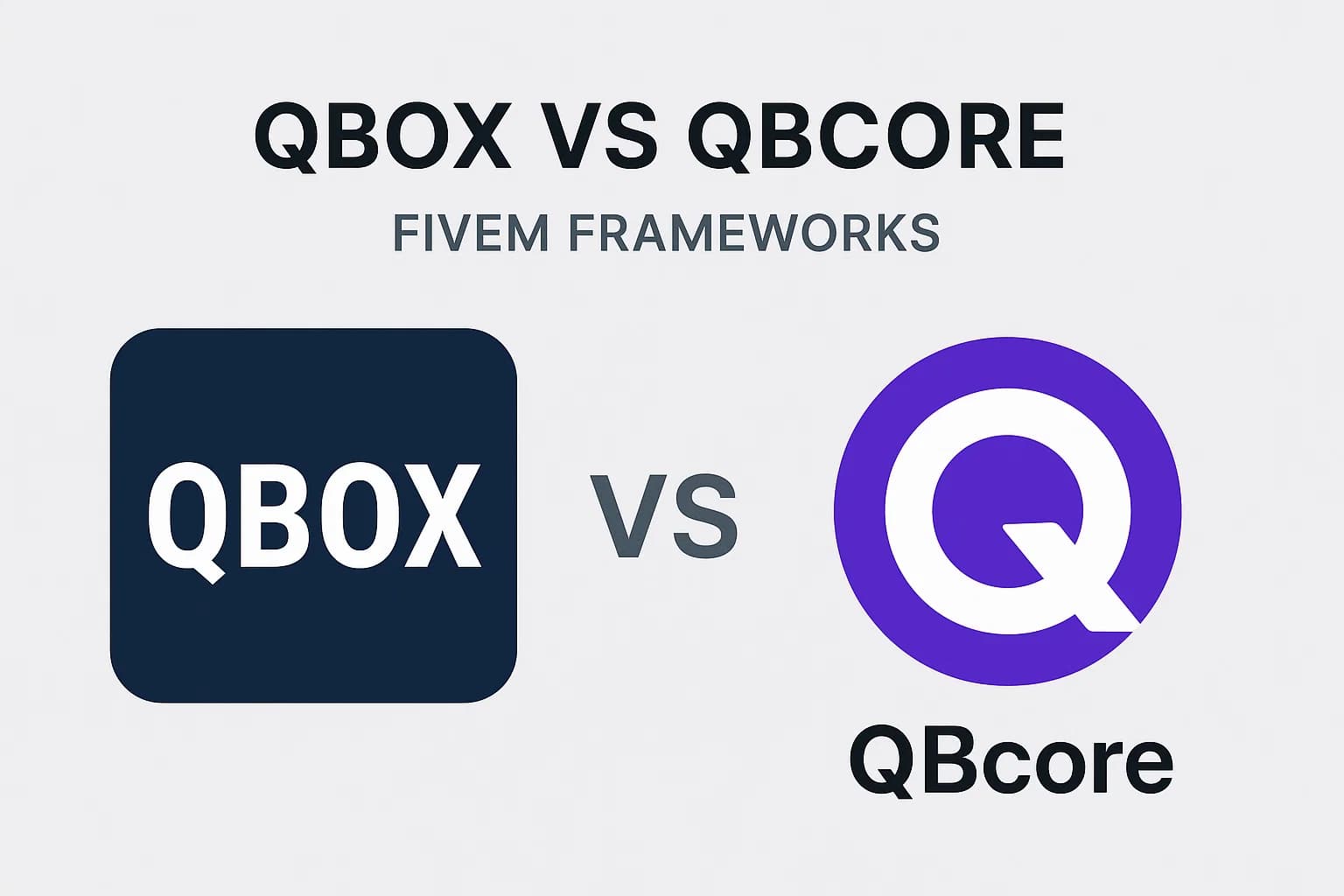
- ✅ QBCore - Native QB compatibility with qb-inventory and qb-jobs for department-specific frequencies
- ✅ QBOX - Works seamlessly with QBOX framework and ox_inventory system
- ✅ Standalone - Can operate independently for servers using custom frameworks
- ✅ ox_inventory - Direct integration with ox_inventory for radio item management
- ✅ qs-inventory - Compatible with Quasar inventory system
Configuration Examples
Law Enforcement Setup: Configure frequencies 100-199 as encrypted channels accessible only to police jobs. Create sub-channels for patrol units (100-120), detectives (121-140), SWAT (141-160), and dispatch (161-180). Set transmission range to 15km to cover the entire map, with signal degradation in tunnels.
Gang Territory Setup: Assign each gang a private encrypted frequency range (300-310 for Grove Street, 311-320 for Ballas, etc.). Limit range to 5km to create tactical advantages for territory control. Require special encrypted radio items that can only be obtained through gang membership or black market purchases.
Civilian Business Setup: Create open frequencies (500-599) for taxi companies, delivery services, and mechanics. Allow anyone to access these channels but limit range to 8km. No encryption needed, fostering open communication and business coordination.
Advanced Features
The script includes repeater tower support, allowing server owners to place radio repeater locations on the map that extend transmission range within certain areas. This creates strategic value for controlling certain territories and adds realism - emergency services might have repeater access while criminals must rely on direct line-of-sight communication.
Signal quality degradation is calculated based on distance and environmental obstacles. A transmission from inside a building to someone in a tunnel might experience heavy static, while clear line-of-sight communications remain crisp. This adds tactical depth to radio positioning during operations.
Roleplay Enhancement
Realistic radio systems dramatically improve coordination-based roleplay scenarios. Police pursuits become more engaging when officers can coordinate positions, call for backup, and update dispatch in real-time. EMS crews can triage multiple emergency calls and coordinate ambulance dispatches. Gang members can warn each other about police presence, coordinate defense during turf wars, and maintain lookout communications.
The battery mechanic adds resource management depth - players must choose between extended radio use and conserving battery for critical moments. This creates emergent gameplay where running out of battery at a crucial moment can lead to interesting roleplay consequences.
What Makes It Stand Out
The izzy Radio script goes beyond simple channel-based voice communication by implementing realistic radio mechanics that professional emergency services actually use. The encryption system allows for proper operational security rather than relying on out of character knowledge boundaries. Range limitations and signal degradation create tactical considerations that reward good positioning and coordination. The battery system prevents radio communication from being an unlimited resource, adding consequence to prolonged operations. The clean UI and intuitive controls make it accessible to new players while the depth of features satisfies experienced roleplayers who want authentic communication systems. Server owners report that implementing proper radio communication transforms their emergency services and gang roleplay from chaotic shouting matches into organized, tactical operations that create compelling gameplay moments. This is one of those foundational scripts that elevates the entire server's roleplay quality.
Community Feedback
Players consistently praise realistic radio systems for creating immersion that simple voice chat can't match. The click-to-talk mechanic, radio static, and proper channel management make communication feel intentional and professional rather than casual conversation. Emergency services players particularly appreciate the ability to separate radio traffic from proximity voice, allowing them to coordinate with dispatch while still interacting with civilians on scene.