Racing & Tuning
-38% OFF
Mechanic Tuner Script (DebuX)
Detail Config - Pricing etc. everything is configurable - New mechanics may be added - Language can be customized - Settings can be configured qbCore
$30.23$48.59
Money-Back Guarantee
14-day refund policy
Lifetime Updates
Free updates forever
Open Source
Inspect & modify the code
SSL Encrypted
|Visa, Mastercard, Amex, Apple Pay
|Crypto
Video Preview
Click to load video from YouTube. By watching, you agree to their privacy policy.
Description
Mechanic Tuner Script (DebuX) - Advanced Vehicle Customization System
The Mechanic Tuner Script by DebuX revolutionizes vehicle customization on FiveM servers with a comprehensive tuning and modification system that goes far beyond basic paint jobs. This professional-grade mechanic script provides realistic vehicle diagnostics, performance tuning, visual customization, repair workflows, and dyno testing that transforms simple garages into fully functional automotive tuning shops. Perfect for roleplay servers with mechanic jobs, car culture communities, or racing servers where vehicle performance matters, this system brings authentic automotive tuning to your server.
https://www.youtube.com/watch?v=KQOd_AJcIJIWhat's Included
You'll receive a complete vehicle tuning ecosystem featuring diagnostic systems that identify vehicle problems and damage, performance tuning options for engine, transmission, turbo, and suspension upgrades, visual customization including body kits, spoilers, wheels, and paint, repair functionality for fixing damaged components, dyno testing to measure horsepower and performance gains, and parts inventory management for mechanic businesses. The system uses realistic automotive terminology and follows actual tuning shop workflows rather than magical instant modifications.
The script includes mechanic job integration allowing players to earn money by servicing customer vehicles, parts ordering systems that create supply chain roleplay, skill progression where experienced mechanics unlock advanced tuning options, and business management features for shop owners to set prices, hire employees, and track revenue. Every modification affects actual vehicle performance and handling, not just cosmetic changes.
Key Features
- Vehicle Diagnostics - Comprehensive diagnostic system that scans vehicles for engine problems, transmission issues, suspension damage, electrical faults, and wear-and-tear requiring maintenance.
- Performance Tuning - Engine upgrades affecting horsepower and acceleration, transmission tuning for shift patterns and gear ratios, turbo/supercharger installation and boost adjustment, suspension modifications changing handling characteristics, brake upgrades improving stopping power, and weight reduction options.
- Visual Customization - Body kit installation with wide-body options, spoiler and wing selections, custom wheel fitment and sizing, paint jobs including matte, metallic, and candy finishes, vinyl wraps and liveries, window tinting, underglow lighting, and interior modifications.
- Dyno Testing - Realistic dynamometer testing showing before-and-after dyno charts, horsepower and torque curves, 0-60 times and quarter-mile performance, and visual feedback validating performance modifications.
- Repair System - Component-based repair requiring mechanics to diagnose issues, order specific parts, install replacements, and test vehicles before returning to customers.
- Parts Inventory - Shop inventory management where mechanics stock parts, order from suppliers, manage pricing, and track which components are available for installations.
- Work Orders - Customer job system where players drop off vehicles, mechanics create work orders, track labor time, itemize parts and service costs, and process payment upon completion.
- Skill Progression - Mechanic leveling system where experience unlocks advanced tuning capabilities, reduces installation times, and improves diagnostic accuracy.
- Business Management - Shop owner features including employee hiring, service pricing, revenue tracking, customer satisfaction ratings, and reputation systems.
- Framework Integration - Deep integration with ESX, QBCore, and other frameworks for job systems, economy, and inventory compatibility.
Perfect For
- Roleplay servers with active mechanic job systems and automotive repair businesses
- Racing communities where vehicle performance tuning affects competitive outcomes
- Car culture servers focused on vehicle customization, shows, and modification culture
- Economy servers where mechanic shops are legitimate businesses generating revenue
- Servers wanting realistic vehicle maintenance and repair instead of instant health restoration
- Communities with import/export or vehicle sales where modifications add value to cars
Technical Details
- Performance: Optimized code with efficient handling modification and minimal resource usage
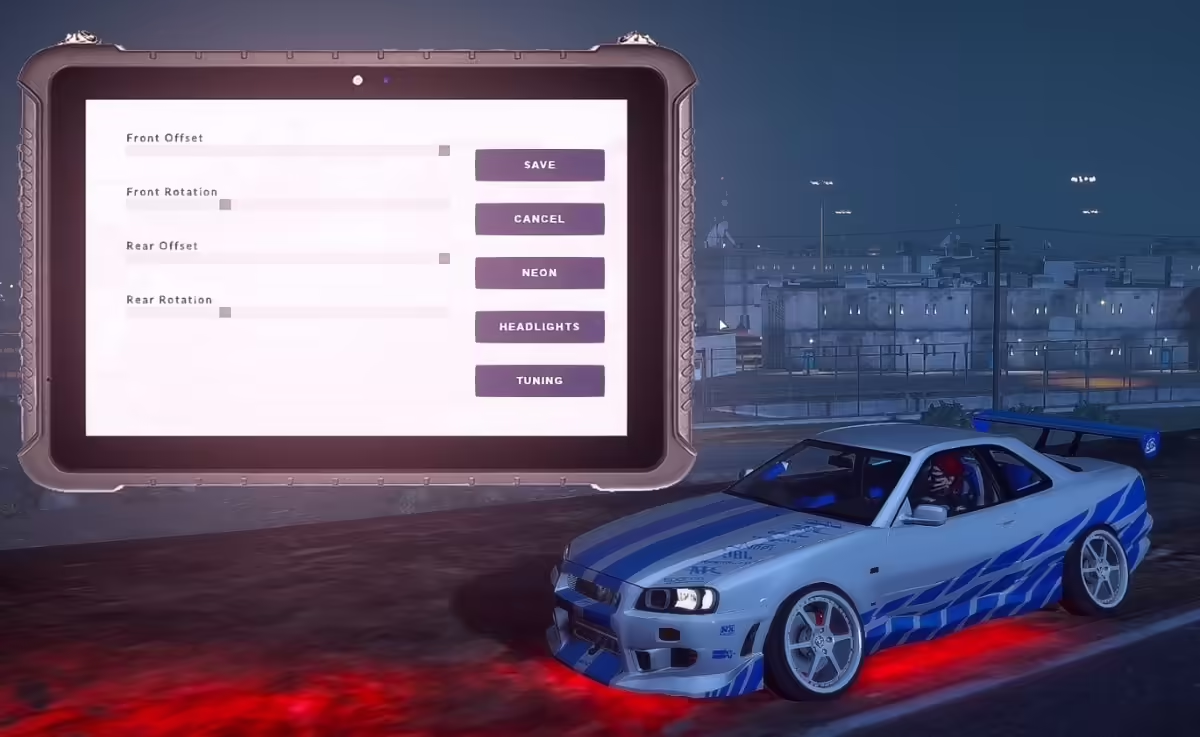
- UI System: Modern HTML/CSS interface with drag-and-drop visual customization and real-time previews
- Database: MySQL storage for vehicle modifications, work orders, parts inventory, and mechanic statistics
- Dependencies: Works with es_extended, qb-core, ox_inventory, and standard vehicle handling systems
- Customization: Extensive config for pricing, available modifications, skill requirements, and shop locations
- Handling: Integrates with FiveM handling modifications to affect actual vehicle performance
Installation
- Download the Mechanic Tuner Script (DebuX) files and extract to resources folder
- Import the included SQL file to create database tables for modifications, work orders, and inventory
- Configure config.lua to set framework (ESX/QBCore), shop locations, and available modifications
- Define mechanic job in your framework's job system and set appropriate salary/permissions
- Configure parts inventory, pricing, and skill progression parameters to match your economy
- Add ensure mechanic-tuner-debux to server.cfg file
- Optional: Set up supplier NPCs or scripts for parts ordering roleplay
- Restart server and test the system at configured mechanic shop locations
Framework Compatibility
- ✅ ESX - Full integration with esx_mechanicjob, esx_society for shop businesses, and esx_vehicleshop for sales integration.
- ✅ QBCore - Compatible with qb-mechanicjob, qb-management for shop ownership, and qb-customs for extended functionality.
- ✅ Standalone - Can operate independently for servers using custom framework solutions or minimal dependencies.
- ✅ All Inventory Systems - Works with ox_inventory, qb-inventory, esx_inventory for parts management.
What Makes It Stand Out
Unlike basic bennys workshop scripts that just apply visual mods instantly, the Mechanic Tuner Script by DebuX creates realistic automotive shop workflows. Mechanics must diagnose problems using the diagnostic interface, identify which parts are damaged or need upgrading, check inventory to see if parts are in stock, order missing components if necessary, perform the actual installation work, test the vehicle post-modification, and finally return it to the customer with itemized invoicing.
The performance modifications actually affect vehicle behavior rather than just changing numbers on a screen. Engine upgrades increase acceleration and top speed, transmission tuning changes shift points and gear ratios affecting how the car drives, suspension modifications alter handling characteristics and cornering ability, brake upgrades reduce stopping distances, and weight reduction improves power-to-weight ratio. Skilled tuners can transform economy cars into competitive street racers or optimize already fast cars for specific racing styles.
Diagnostic System
The diagnostic interface mimics professional automotive scan tools. Mechanics connect to vehicle OBD ports and run diagnostic scans that identify specific fault codes, component wear percentages, fluid levels, electrical system status, and recommended maintenance. This creates realistic troubleshooting where mechanics must interpret diagnostic data rather than being told fix engine generically.
Different diagnostic scan levels exist - basic scans identify obvious problems quickly, advanced scans uncover intermittent issues and early wear, and master-level diagnostics reveal optimization opportunities invisible to novice mechanics. This skill progression rewards experienced mechanics who can diagnose complex problems faster and more accurately.
Performance Tuning Depth
Engine Tuning: Install upgraded air intakes for better airflow, performance exhaust systems reducing back pressure, ECU remaps adjusting fuel maps and timing, upgraded fuel systems supporting higher power, internal engine builds with forged components, and forced induction (turbo/supercharger) for massive power gains. Each modification shows dyno results validating performance improvements.
Transmission Work: Upgrade clutches to handle more power, install short-throw shifters for faster gear changes, adjust final drive ratios for acceleration vs top speed balance, and tune automatic transmissions for sport or economy shift patterns. Racing clutches might be grabby at low speeds but essential for launching high-power cars.
Suspension Tuning: Lower or raise ride height affecting aerodynamics and handling, adjust spring rates and damping for track vs street use, install sway bars reducing body roll, upgrade bushings for sharper response, and corner balance weight distribution. Suspension changes visually affect vehicle stance and dramatically alter handling feel.
Brake Systems: Upgrade brake pads and rotors, install big brake kits for racing, add brake ducting for cooling, and tune brake bias for optimal stopping balance. Better brakes allow later braking into corners, crucial for racing competitiveness.
Visual Customization
The visual modification system goes beyond standard GTA V customs. Wide-body kits physically widen vehicles for aggressive stances and larger wheels, custom spoilers and wings provide downforce (affecting handling), wheel fitment allows stance customization with different offsets and sizes, paint options include multi-stage finishes and color-shifting effects, vinyl wraps enable full custom designs, and lighting modifications add underglow, interior ambient lighting, and custom headlight colors.
All visual modifications can be previewed in real-time before committing, allowing customers to see exactly how their car will look. This prevents expensive mistakes and enables collaborative design between customer and mechanic.
Dyno Testing Experience
The dyno system provides visual and numerical feedback on vehicle performance. Vehicles are strapped to the dyno, mechanics run the test through gear ranges, and results display on dyno charts showing horsepower and torque curves across RPM ranges. Before-and-after testing proves modification effectiveness - customers can see their baseline 350hp increased to 500hp after turbo installation, validating the expense.
Dyno results can be saved and shared, creating bragging rights for high-power builds. Servers can maintain dyno leaderboards showing the most powerful cars, different categories for various vehicle classes, and records for specific builds (highest naturally aspirated, most powerful turbo four-cylinder, etc.).
Work Order System
When customers bring vehicles to mechanic shops, the work order system creates structured service appointments. Mechanics create work orders documenting customer requests, diagnostic findings, recommended services, parts required, estimated costs, and labor time. Customers review and approve work orders before mechanics begin, creating realistic business interaction.
Work orders track labor hours so mechanics are paid for their time, itemize parts costs at shop-defined markups, show total invoice amounts before customer payment, and maintain service history for each vehicle. This creates transparent pricing and professional business practices.
Parts Management
Mechanic shops maintain parts inventory that must be stocked and managed. Shops order parts from suppliers (NPC or player-run), pay wholesale costs and sell at retail markups, track inventory levels of common parts, and special-order rare components for exotic builds. This creates supply chain gameplay where shops must balance inventory investment against customer demand.
Part quality tiers can exist - cheap parts install quickly but wear faster, OEM parts provide reliable performance, and performance parts cost more but deliver superior results. Customers choose based on budget and performance needs.
Skill Progression
New mechanics start with basic capabilities and unlock advanced features through experience. Level 1 mechanics perform oil changes and basic repairs, Level 3 mechanics unlock suspension and brake upgrades, Level 5 mechanics can perform engine swaps and turbo installations, and Master mechanics access unrestricted tuning and fastest installation times.
Experience is earned by completing work orders, performing installations successfully, diagnosing difficult problems, and receiving customer satisfaction ratings. This creates career progression where veteran mechanics command higher pay and prestige.
Business Ownership
Players can own mechanic shops as businesses through framework society systems. Owners set service pricing, hire employee mechanics with profit-sharing or salary, purchase shop upgrades like additional lifts or dyno installations, advertise services, and compete with other shops for customers. Successful shops become profitable enterprises while poorly managed shops struggle.
Shop reputation systems track customer satisfaction, on-time service completion, and quality of work. High-reputation shops can charge premium prices, while low-reputation shops must discount services to attract customers.
Racing Integration
For racing servers, this tuning system creates competitive depth. Racers must visit mechanics to optimize vehicles for specific race types - drag racing needs different tuning than circuit racing. The mechanic-racer relationship becomes important as skilled mechanics develop tuning specializations. Top racers employ personal mechanics who understand their driving style and build cars accordingly.
Economic Impact
Mechanic services generate significant economic activity. Performance modifications can cost tens of thousands for high-end builds, creating money sinks that balance server economies. Mechanics earn steady income from repair work and lucrative payouts from major builds. Parts suppliers profit from wholesale to retail markups. Racing scene drivers spend heavily on competitive advantages. This creates economic ecosystems around automotive culture.
Customization Options
Server admins configure every aspect - which modifications are available and at what costs, skill requirements for advanced tuning, parts inventory refresh rates and supplier pricing, shop location spawns and access controls, and dyno testing requirements and visual settings. The system adapts to server economy scales and roleplay intensity preferences.
Related QBCore Scripts
Related Products

Questions & Answers
0 questions
No questions yet
Be the first to ask a question about this product!