Garage Scripts
-29% OFF
Garage Impound System
Garage Impound System - In German language, but you can also translate it to any other language. Compatible with ESX framework for FiveM servers.
23,99 €33,99 €
Money-Back Guarantee
14-day refund policy
Lifetime Updates
Free updates forever
Open Source
Inspect & modify the code
SSL Encrypted
|Visa, Mastercard, Amex, Apple Pay
|Crypto
Video Preview
Click to load video from YouTube. By watching, you agree to their privacy policy.
Description
Garage Impound System - Comprehensive Vehicle Storage & Retrieval Management
The Garage Impound System delivers a complete vehicle management solution that handles both civilian parking garages and police impound operations in a single unified script. This dual-purpose system lets players store their personal vehicles in public garages located throughout the map while giving law enforcement the tools to tow, impound, and release illegally parked or abandoned vehicles. Unlike basic garage scripts that just spawn cars at markers, this system includes realistic retrieval fees, impound timers, vehicle damage persistence, and administrative tools that create genuine consequences for reckless driving and parking violations.
What makes this system essential for serious roleplay servers is how it creates meaningful gameplay loops around vehicle ownership. Players can't just respawn their totaled sports car instantly for free - damaged vehicles require repair costs before retrieval, impounded vehicles must be claimed from the impound lot with fees based on infraction severity, and abandoned vehicles eventually get auctioned if unclaimed. This economic friction keeps money flowing through your server while creating roleplay opportunities for tow truck drivers, impound lot attendants, police officers, and mechanics.
What's Included
This comprehensive package includes everything needed for complete vehicle management across your server. You'll get a network of public garage locations where players can store and retrieve personal vehicles, a police impound system with towing mechanics and fee collection, configurable impound lot locations with restricted access for law enforcement, automatic fee calculation based on vehicle class and impound reason, damage state persistence that tracks vehicle condition between storage/retrieval, an administrative interface for managing impounded vehicles and override fees, job-specific features for tow truck drivers and impound attendants, and detailed logging of all vehicle storage, retrieval, and impound actions for server administration.
The system supports multiple garage types including public parking (free or paid), private gang garages (restricted access), job-specific vehicle storage for police/EMS/mechanic fleets, and the central impound facility where towed vehicles are held. Each location type has independent configuration for capacity limits, fees, allowed vehicle types, and access permissions.
Key Features
- Multi-Location Garage Network - Place public garages throughout the map at logical locations like gas stations, apartment complexes, and downtown parking structures
- Police Impound Integration - Officers can tow illegally parked vehicles, set impound reasons, and calculate fees based on violation severity
- Damage State Persistence - Vehicles retain their exact damage condition when stored and retrieved, preventing exploit abuse
- Dynamic Fee System - Configurable pricing based on vehicle class, storage duration, and impound reason (parking ticket vs. street racing)
- Tow Truck Job Support - Dedicated mechanics for tow truck operators to hook, transport, and deliver vehicles to impound
- Vehicle Preview System - Players can see their stored vehicles before retrieval with damage status and current fees displayed
- Impound Timer Mechanics - Set minimum hold times before impounded vehicles can be retrieved, preventing instant reclaim
- Administrative Override - Server admins can manually release vehicles, waive fees, or permanently seize vehicles for rule violations
- Capacity Management - Limit how many vehicles players can store per garage type, encouraging strategic vehicle collection
- Gang Garage Support - Restricted garages for gang members to store shared vehicles or personal fleet away from public access
- Vehicle Auction System - Unclaimed impounded vehicles after X days automatically go to auction or get deleted based on configuration
- Detailed Logging - Track who stored/retrieved/impounded vehicles with timestamps for administrative oversight and dispute resolution
Perfect For
- Serious roleplay servers requiring realistic vehicle ownership and parking mechanics
- Servers with active law enforcement that need proper tools for traffic enforcement and vehicle impound
- Economy-focused communities where storage fees and impound costs create money sinks
- Servers wanting to prevent vehicle spam by limiting how many cars players can have readily available
- Communities with tow truck jobs that need realistic vehicle recovery gameplay
- Servers transitioning from basic spawn menus to immersive vehicle management systems
Installation & Setup
- Extract the garage impound system to your server's resources folder
- Import the SQL file to create necessary database tables for vehicle storage and impound records
- Configure garage locations, fees, and capacity limits in the config.lua file
- Set up impound lot location(s) with appropriate job restrictions for police access
- Define impound fee structures based on violation types and vehicle classes
- Configure tow truck job integration if using dedicated tow operators
- Add garage markers and blips to your map for player navigation
- Restart server and test full cycle: store vehicle, impound vehicle, retrieve from impound
Framework Compatibility
- ✅ ESX Legacy - Full integration with ESX jobs, society accounts, and vehicle ownership system
- ✅ QBCore - Native QBCore support with job permissions, garage stashes, and police impound integration
- ✅ QBOX - Compatible with QBOX framework including modern vehicle persistence features
- ⚠️ Standalone - Can be adapted for custom frameworks but requires vehicle ownership integration
Garage System Deep Dive
The public garage network provides convenient vehicle storage across the map at realistic locations. Downtown Los Santos has multi-level parking garages, Sandy Shores has a small public lot near the gas station, and Paleto Bay offers limited parking near the sheriff's office. Each location can have different fee structures - downtown parking might cost $50 per retrieval while rural areas are free, reflecting real-world parking economics.
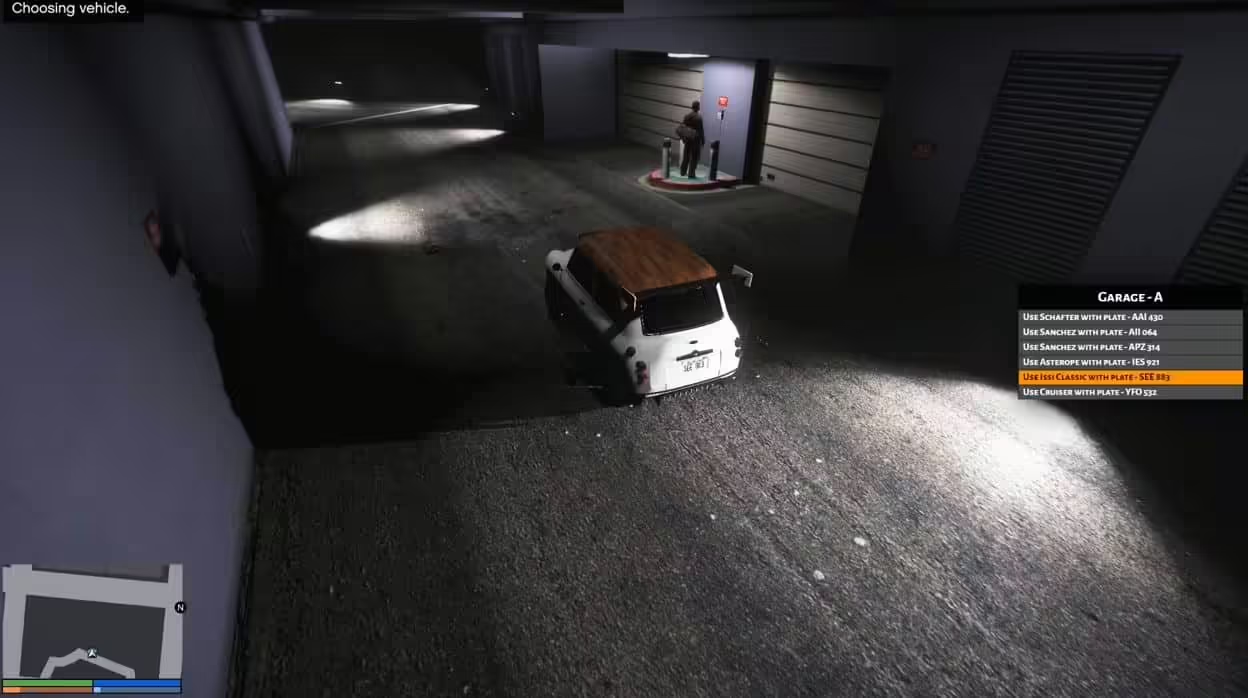
Players access garages through marked interaction points where they see a list of all vehicles they own that aren't currently spawned. The interface shows each vehicle's make/model, current damage condition (pristine, damaged, heavily damaged, destroyed), and any associated retrieval fees. Selecting a vehicle spawns it at designated parking spots with the exact damage state it had when stored, preventing players from using garages to magically repair wrecked cars.
Capacity limits prevent players from hoarding hundreds of vehicles and spamming the server with cars. Configure maximum vehicles per garage (e.g., 10 personal vehicles in public garages, 5 in private gang garages) forcing players to be strategic about which vehicles they keep readily accessible versus stored in long-term overflow locations.
Police Impound Operations
Law enforcement officers with appropriate job permissions can impound vehicles found illegally parked, abandoned, or used in crimes. The impound process starts with the officer approaching a vehicle and selecting the impound option, choosing an impound reason from a configurable list (illegal parking, abandoned vehicle, evidence seizure, street racing, reckless driving), which determines the impound fee tier and minimum hold time.
Once marked for impound, the vehicle either despawns automatically and teleports to the impound lot, or if your server has tow truck drivers, generates a tow job for player tow operators to physically hook and transport to impound. The latter creates more immersive gameplay and job opportunities but requires additional script integration with tow truck systems.
Impound fees scale based on violation severity and vehicle value. A parking ticket might result in a $200 impound fee with 30-minute hold time, while a vehicle seized during a street racing bust could incur $2,500 fees with 2-hour minimum impound. These escalating consequences discourage repeat offenders and create genuine financial risk for reckless behavior.
Impound Lot Mechanics
The impound lot serves as a restricted facility where towed vehicles are held. Players must travel to the impound location in person (no remote retrieval) and interact with the impound attendant (NPC or player job). The attendant interface shows all vehicles the player has impounded with details on impound reason, who towed it, current fees, and when it can be released.
If the minimum impound time hasn't elapsed, players see a countdown timer and cannot retrieve the vehicle regardless of willingness to pay. This prevents wealthy players from treating impound as expensive parking by immediately reclaiming vehicles. Once the timer expires, paying the fee releases the vehicle to a designated parking spot outside the impound lot.
Vehicles that remain unclaimed for extended periods (configurable, typically 48-72 hours real-time) enter an auction system where other players can bid on them, or they're automatically deleted if the server prefers to remove abandoned vehicles rather than redistributing them. This cleanup mechanism prevents the database from filling with vehicles nobody wants while creating potential bargain opportunities for savvy players.
Tow Truck Job Integration
When configured for player-operated towing, the system creates an entire job profession around vehicle recovery. Tow operators receive notifications when police mark vehicles for impound or when civilians call for roadside assistance. The tow mechanic uses realistic hooking where the operator must position their tow truck properly, deploy the hook, attach to the target vehicle, and carefully transport without excessive speed or collisions that could further damage the cargo.
Tow drivers earn money per successful delivery to impound lots or player-specified garages, creating a steady income stream for players who enjoy driving and logistics gameplay. Advanced configurations can include private towing for gang vehicles (retrieving member cars after police chases) or premium roadside service delivering damaged vehicles to mechanic shops for repairs.
Administrative Controls
Server administrators have powerful tools for managing edge cases and player disputes. The admin interface shows all currently impounded vehicles across the server with full details on owner, impounding officer, reason, current fees, and hold status. Admins can manually release vehicles without payment (correcting wrongful impounds), adjust fees up or down, extend or reduce hold times, or permanently seize vehicles for rule violations.
The logging system records every action for accountability - who stored which vehicle where, who retrieved it, who impounded it and why, and who paid what fees. These logs are invaluable for resolving player disputes (Officer X impounded my car for no reason!) and detecting exploit attempts like duplication or fee evasion.
Performance & Optimization
Despite managing potentially thousands of vehicles across dozens of garage locations, the system maintains excellent performance through intelligent database queries and efficient vehicle spawning. Garages only query vehicles for the specific player accessing them rather than loading all server vehicles. Vehicle spawning uses proper cleanup to despawn cars when players store them, preventing invisible collision objects that plague poorly coded garage systems.
Resource usage typically runs at 0.01-0.02ms when players aren't actively using garages, spiking briefly to 0.05-0.08ms during vehicle retrieval operations. Even with 100+ players using garages throughout the day, server impact remains negligible compared to other vehicle systems.
What Makes It Stand Out
Many garage scripts are either too basic (just spawn/despawn with no features) or too complex (requiring five dependencies and causing constant conflicts). This system hits the sweet spot - comprehensive enough to create realistic vehicle management gameplay without being so bloated it becomes unmaintainable. The dual civilian/police functionality means you're installing one script that handles two critical server systems rather than trying to integrate separate garage and impound scripts that may conflict.
The damage persistence is particularly important for server economies. Without it, players can wreck expensive supercars during chases, store them in garages, and retrieve them pristine seconds later, completely bypassing repair costs. With persistence enabled, that $2M Zentorno with a destroyed engine stays destroyed until taken to a mechanic and repaired, creating proper economic consequences for reckless driving.
Technical Specifications
- Performance: 0.01-0.02ms idle, 0.05-0.08ms during vehicle retrieval operations
- Database: MySQL/MariaDB with optimized queries for fast vehicle lookup
- Dependencies: ESX/QBCore framework, mysql-async or oxmysql
- Garage Locations: Unlimited (configurable), recommended 15-25 for balanced coverage
- Vehicle Capacity: Per-garage limits configurable, supports thousands of total vehicles server-wide
- Impound Types: Multiple categories with independent fee/time configurations
- File Size: ~3 MB including all scripts and configuration files
Support & Documentation
Your purchase includes detailed installation guides, configuration examples for common server setups, and troubleshooting steps for typical integration issues. The config file contains extensive comments explaining each setting with recommended values for different server types (casual vs. hardcore economy). Video tutorials demonstrate the player experience and administrative tools.
The script receives regular updates maintaining compatibility with FiveM and framework updates. Bug fixes are addressed promptly, and feature requests from the community are considered for future versions. All updates are provided free to existing customers, ensuring your garage system remains functional as your server evolves.
Related Garage Scripts
Questions & Answers
0 questions
No questions yet
Be the first to ask a question about this product!